
What it would do
Record a forward point of view and head movement on a shared timeline. Start a session before the descent, then let it run while your attention stays on the snow.
LOKOL / Experience field guide
The line you see. The moment you keep. The turn you want to understand. A closer look at how the pieces could work together, from the drop-in to the replay.
Explore the system ↓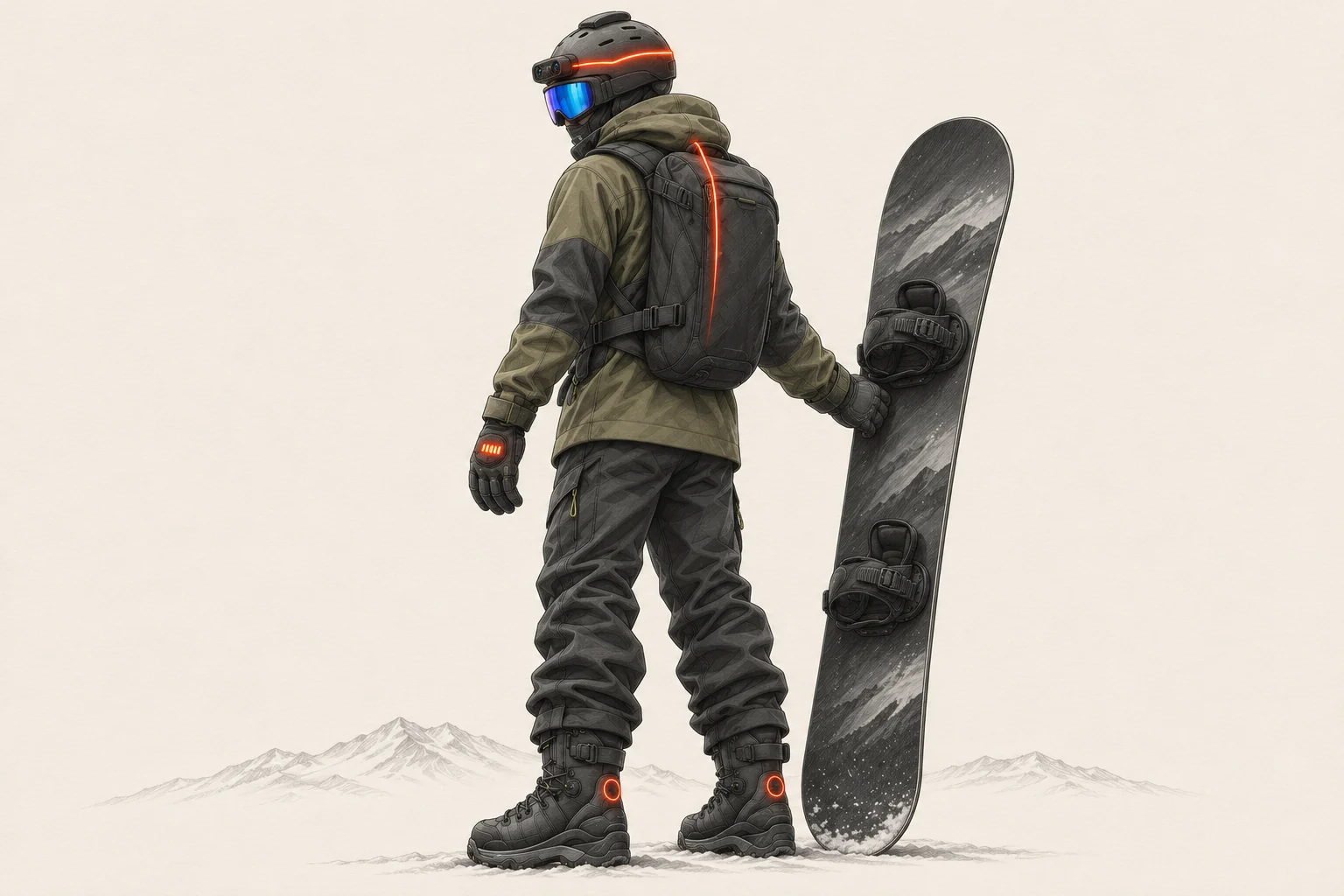
How to read this guide “First ride” describes our proposed MVP. “Future exploration” goes beyond it. All wearable capabilities still need real-world validation; this page explains the intended experience.
See where we are today ↗01 / At the helmet
#01The best line rarely comes with a warning. The helmet is where the story starts: capture what you see, and keep the movement of the run alongside it.
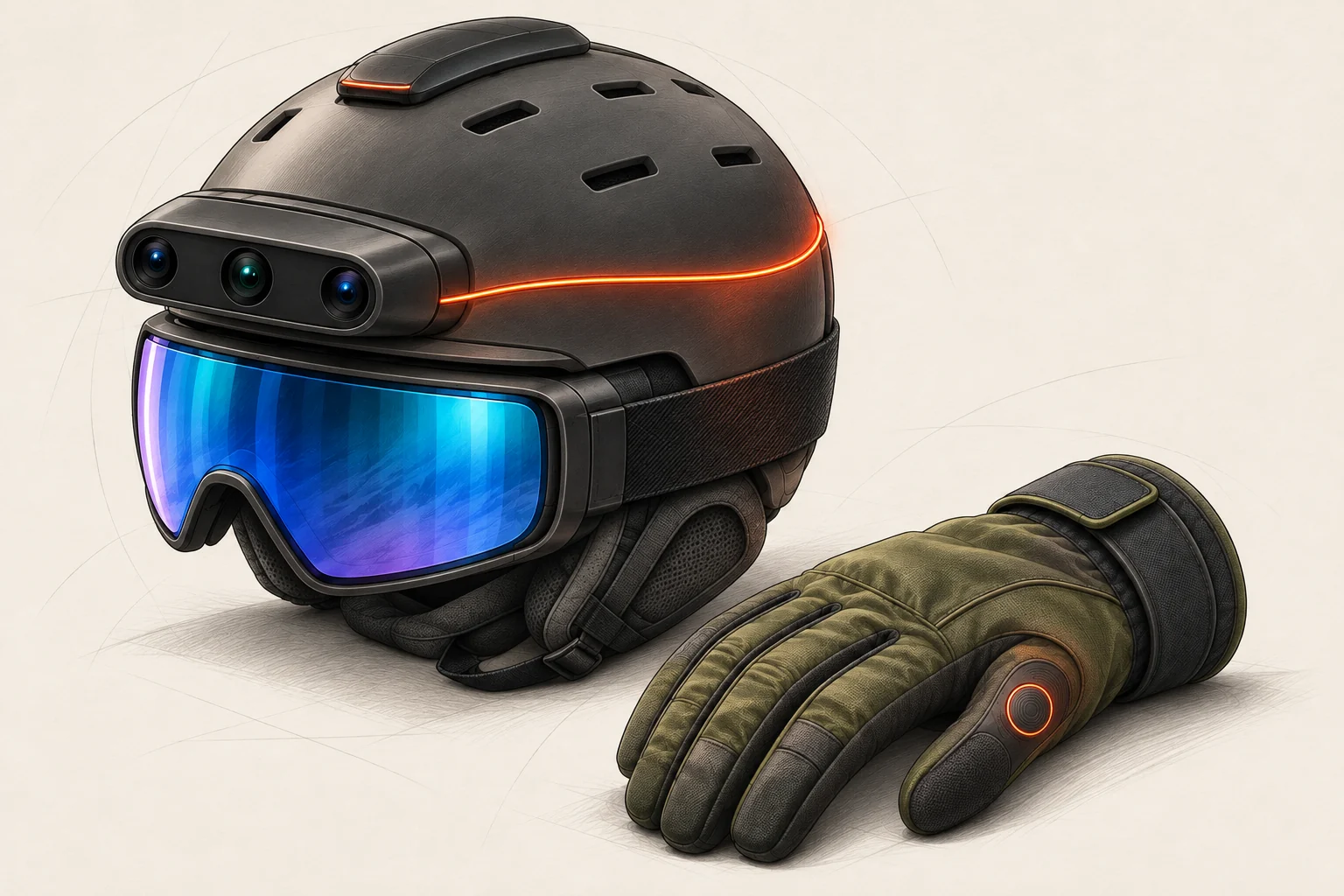
Record a forward point of view and head movement on a shared timeline. Start a session before the descent, then let it run while your attention stays on the snow.
A marked moment should lead back to both the video and the movement around it. You could see where you looked and revisit how that part of the run unfolded.
The film’s orange-red helmet strip, backpack line, and glove and boot accents are part of the visual direction. A second rider uses blue. We want to explore rider identity through that light language; brightness, meaning, and behavior are still design decisions.
One rider, one forward view, local recording, and a clear recording state. Image quality, stable timing, mounting, and cold-weather operation still need testing.
02 / In your view
#02The heads-up display is the rider-facing heart of LOKOL. It would bring the right information into the goggles at the right moment. The first version starts with trustworthy recording feedback. The longer-term vision adds a friend’s position, session timing, and a shared view of the run.
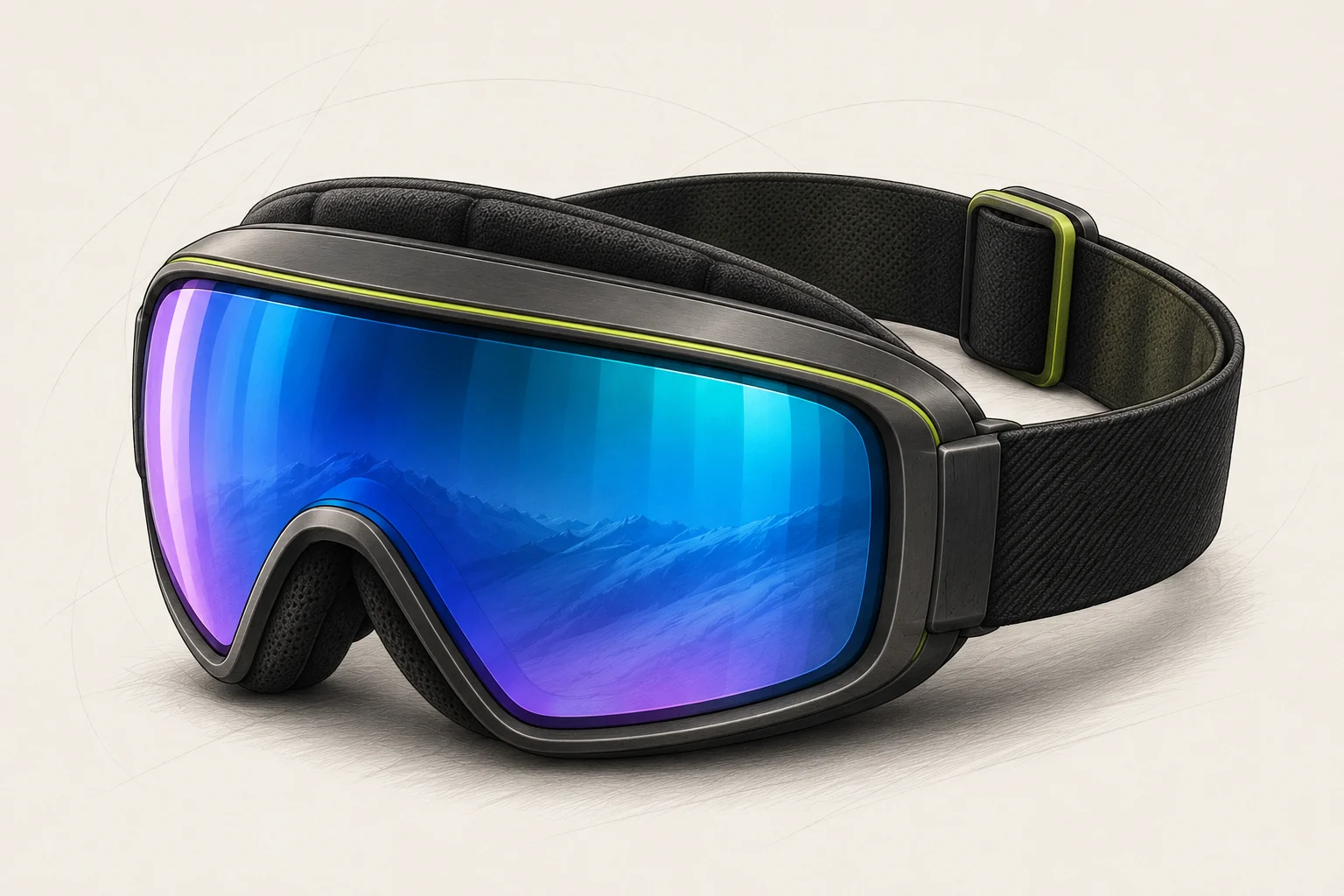
Before the run, a stationary briefing could show readiness, a selected session, and who has joined. During the run, that richer screen gives way to minimal cues. Afterward, the replay becomes the place for detail.
Use readable type, steady placement, and labels alongside colors. Optional audio or tactile confirmations are future explorations; none should be required to understand the recording state.
These web illustrations explain the HUD hierarchy. The visible area, optical alignment, brightness, distraction, and readable text size must be tested in real goggles. Ride is the first MVP scope; Crew and Session are later concepts.
Meet the proposed LOKOL OS ↗Explore game design ↗
Next / Mark it by feel ↘03 / At your fingertips
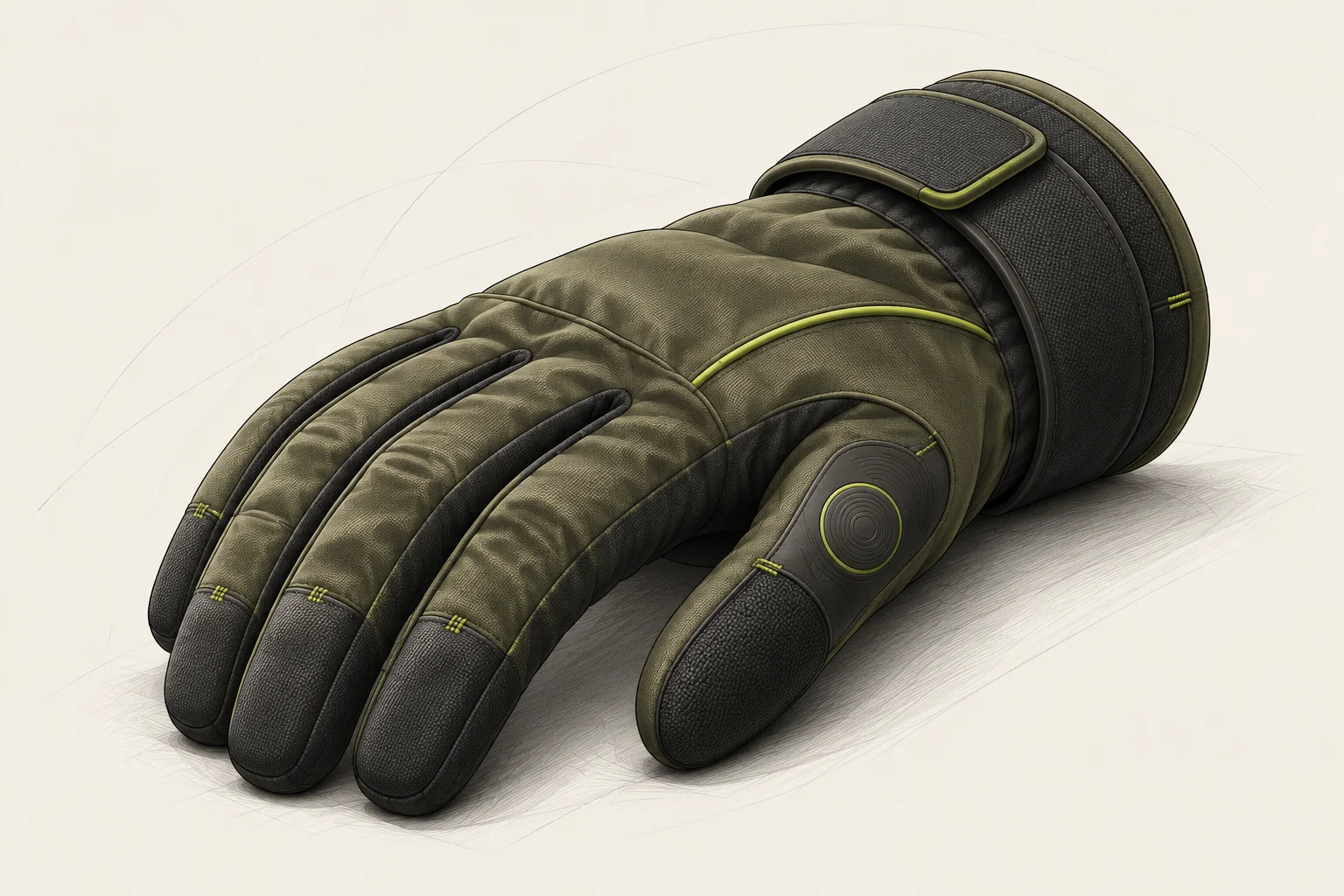
#03A clean landing. A turn that felt different. Your friend disappearing into a cloud of snow. Mark it after it happens, without reaching for a phone.
Proposed highlight window / Timing target, not a measured result
A short press would place a highlight marker in the active session and keep the surrounding footage easy to find. The confirmation in your view closes the loop.
The control needs to be easy to find by feel and difficult to trigger accidentally. Starting and stopping the full recording would happen while stationary.
One deliberate marking action. No on-run menus. Button feel, accidental presses, and reliable confirmation in wet or cold conditions are still to be proven.
04 / Behind the ride
#04The backpack is the quiet center of the system. The design direction moves the work behind the experience into a soft technical pack, leaving the helmet focused on capture and feedback.
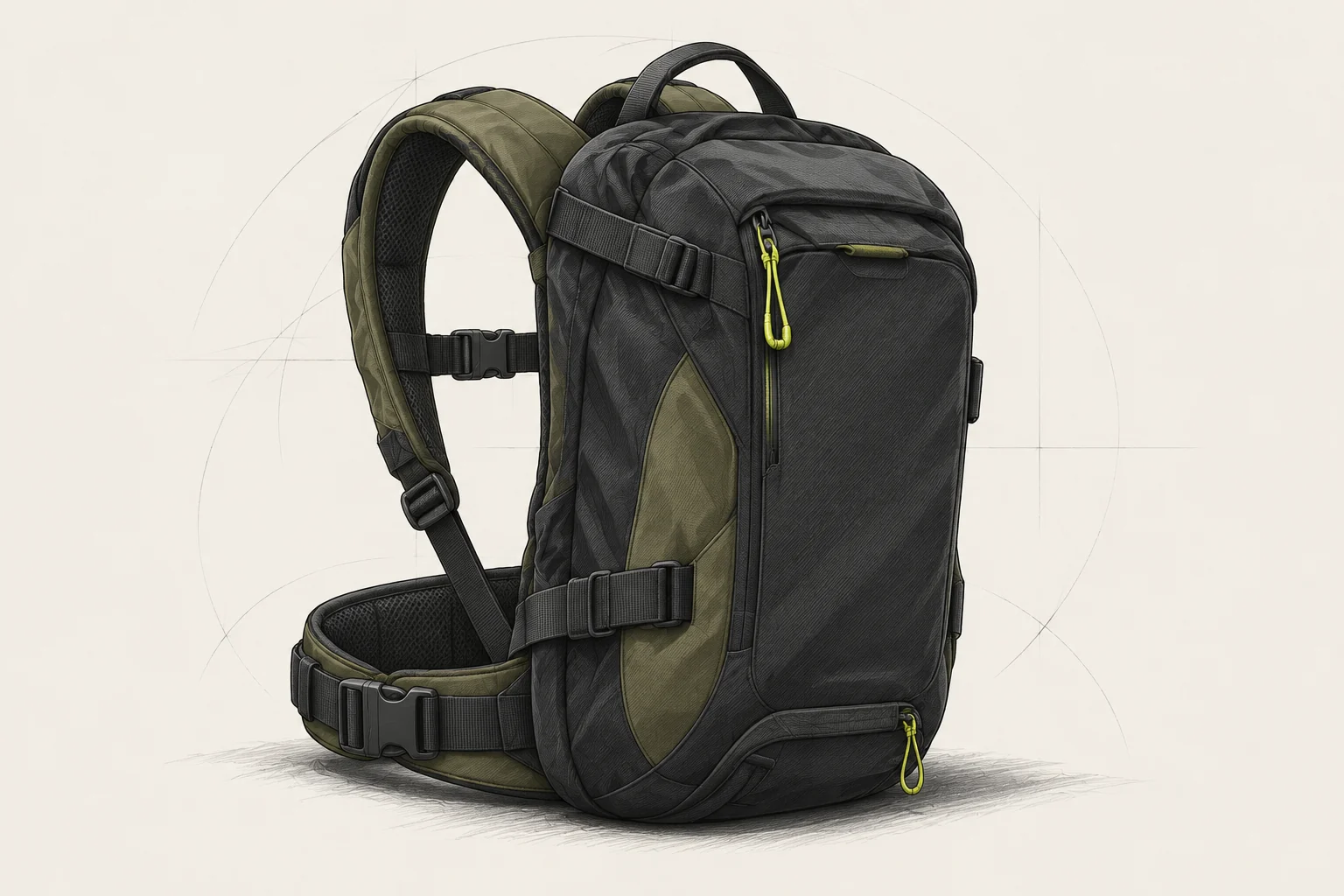
The goal is to keep the recording, highlight markers, and movement together as one session. A local-first design would let capture continue without cell service.
A pre-ride check would make recording readiness, available storage, and power understandable. The rider should know whether the system is ready before dropping in.
Comfort, weight distribution, weather protection, runtime, and safe routing between pieces need physical testing. No all-day battery or universal fit claim is being made.
05 / Across the rider
#05Video tells you what a run looked like. Movement could help you revisit how it felt: the timing of a rotation, the position of your upper body, and the way one turn led into the next.
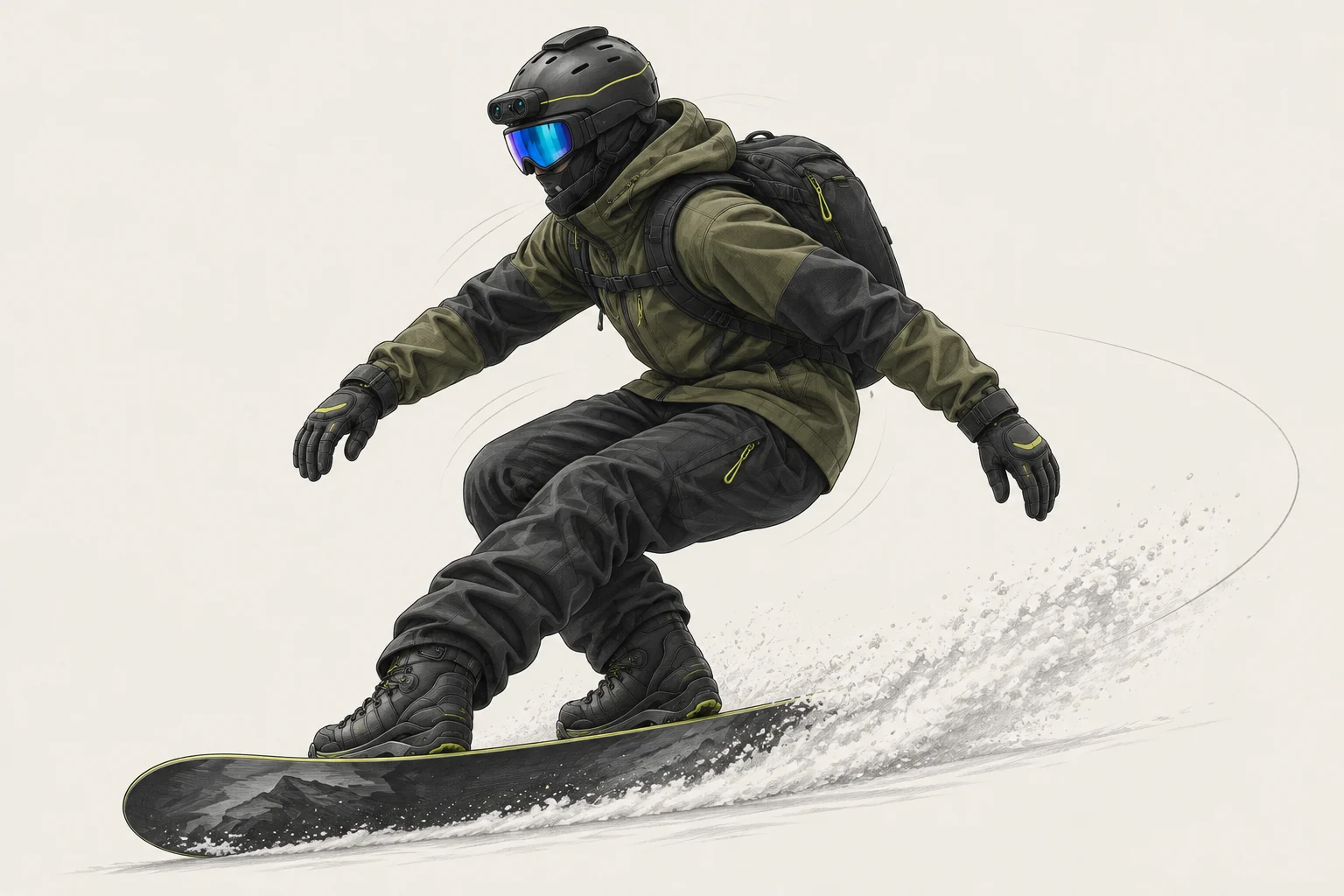
Relate the point of view to the movement of the run.
Explore upper-body timing and changes in posture.
Bring stance and board movement into the same replay.
The visual direction is subtle sensing in clothing, rather than bulky external pods. Comfort and freedom of movement come before adding more measurements.
Start by showing movement clearly beside the video. Compare two moments and let the rider explore the difference before attempting scores, advice, or automated coaching.
Full-body interpretation is outside the first ride MVP. Useful feedback depends on reliable alignment, calibration, and testing across different riders and riding styles.
06 / Underfoot
#06Your feet and board are the connection to the snow. A future layer could bring pressure changes and board movement into the session, giving the replay more of the story.
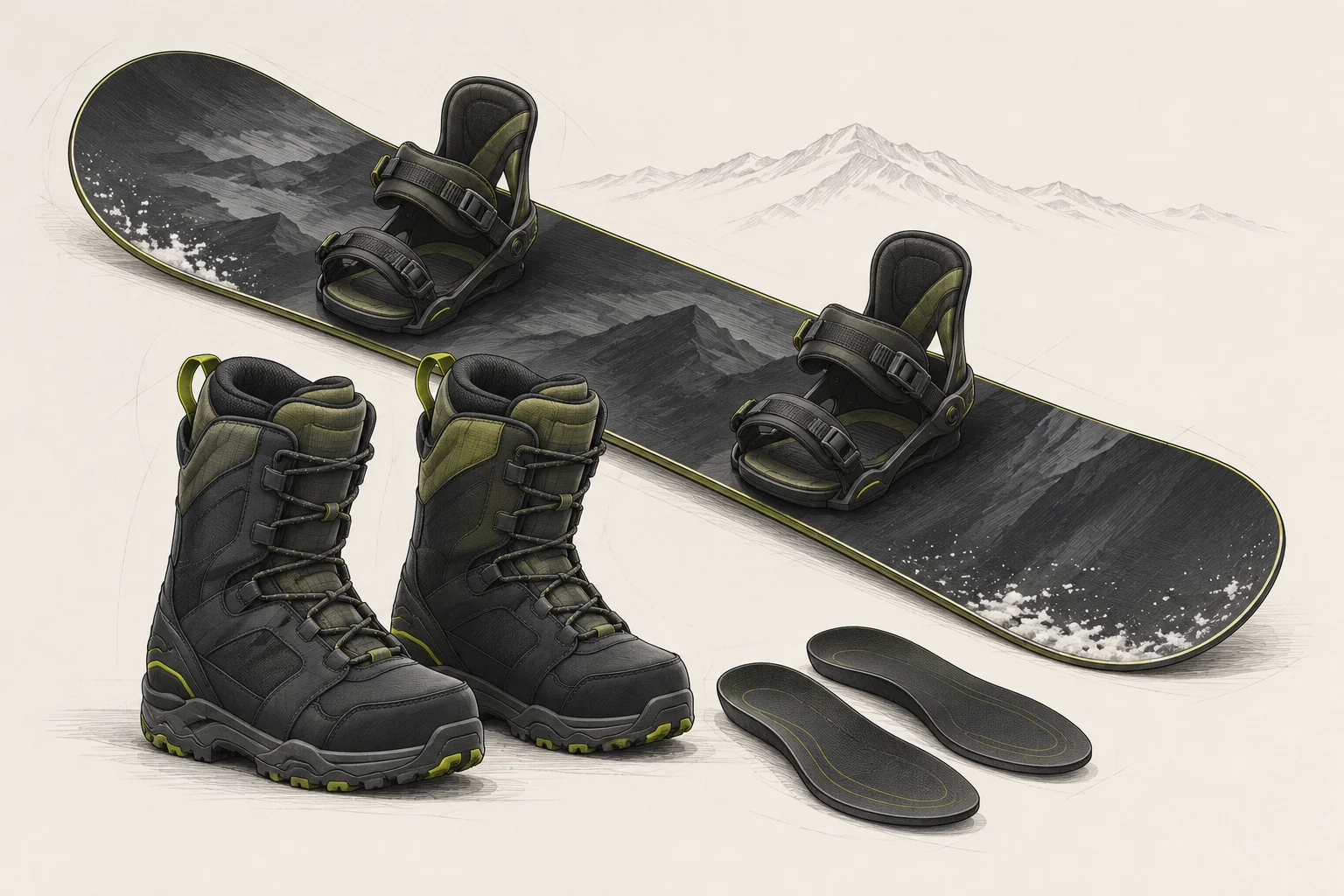
Explore how loading changes through the turn.
Relate that change to the board’s movement.
Schematic only / No measured pressure dataReplay the approach, the change of edge, and the exit together. The goal is to help riders notice patterns, rather than reduce every run to a single score.
Stance, boots, bindings, and riding style all change the picture. Any useful comparison would need to account for the rider and their setup.
Pressure, board tracking, and optional tactile cues are research directions. They are not validated coaching, injury-prevention, or safety features.
07 / After the run
#07At the lodge, the scattered pieces should become one simple session. Open the run, jump to the moments you marked, and decide what is worth taking home.
Video and movement on one timeline.
Jump between your highlight markers.
Choose a moment to export.
The first version would keep the session local by default. Export selected footage when you want to share it, rather than automatically uploading the whole day.
A later shared-session experience could line up two riders’ recordings. Revisit the same moment from different perspectives, with sharing controlled by each rider.
The immediate milestone is a reliable capture → mark → save → replay demonstration for one rider. Shared sessions and deeper movement analysis follow that foundation.
08 / The software experience
#08LOKOL OS is the name we are proposing for the software experience that brings the gear together: your session, your controls, your view, and your replay. It should feel like one coherent product, from getting ready to keeping the last clip.
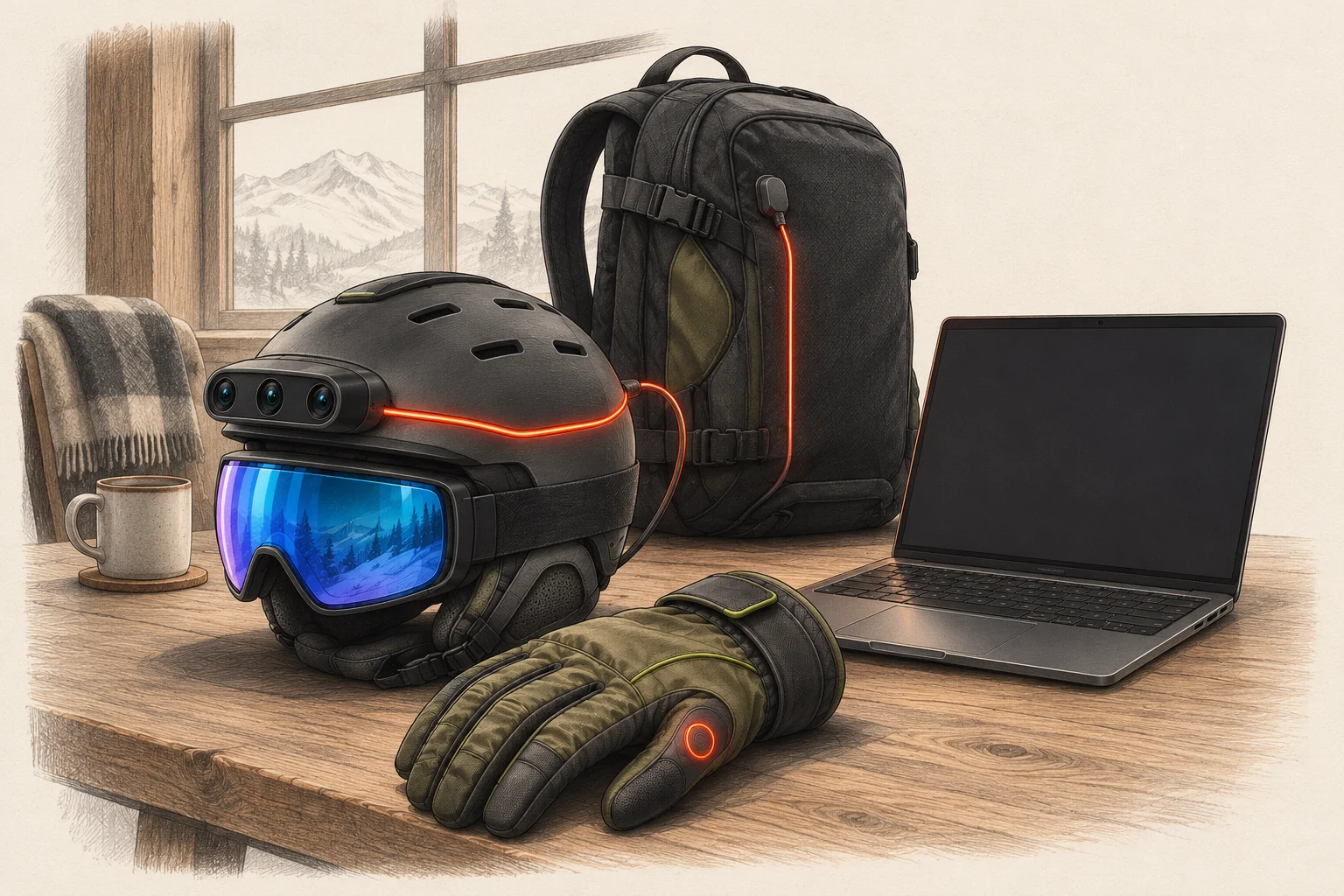
Check the essentials, choose the experience, and begin while stopped.
Record a session and mark moments.
Pair with another rider.
Choose a shared activity.
Review and export locally.
Illustrative software layout. Readiness states above are examples, not live device readings.
Recording, movement, and glove events should refer to the same run. The HUD receives the state of that run; replay uses the same markers to find the right moments later.
A short glove press marks a moment during recording. A deliberate hold while stopped would start or stop a run. The software should make the current state explicit before the rider acts.
A lost control link should be visible. A failed save should not produce a success signal. Earlier completed recordings should remain reviewable after an interruption, with incomplete material identified.
The longer-term direction is a common session foundation for crew views, timed activities, and progression tools. New modes would reuse the same controls, display rules, and local recording.
This is a proposed rider-facing software layer and product identity, not a claim that a new operating system or app ecosystem is built. The immediate software milestone remains the single-rider capture-to-replay loop.
09 / Game & session design
#09The film hints at a mountain that becomes a shared play space. Our first game direction is focused: two riders, an agreed course, a clear start and finish, and a result you can replay together.
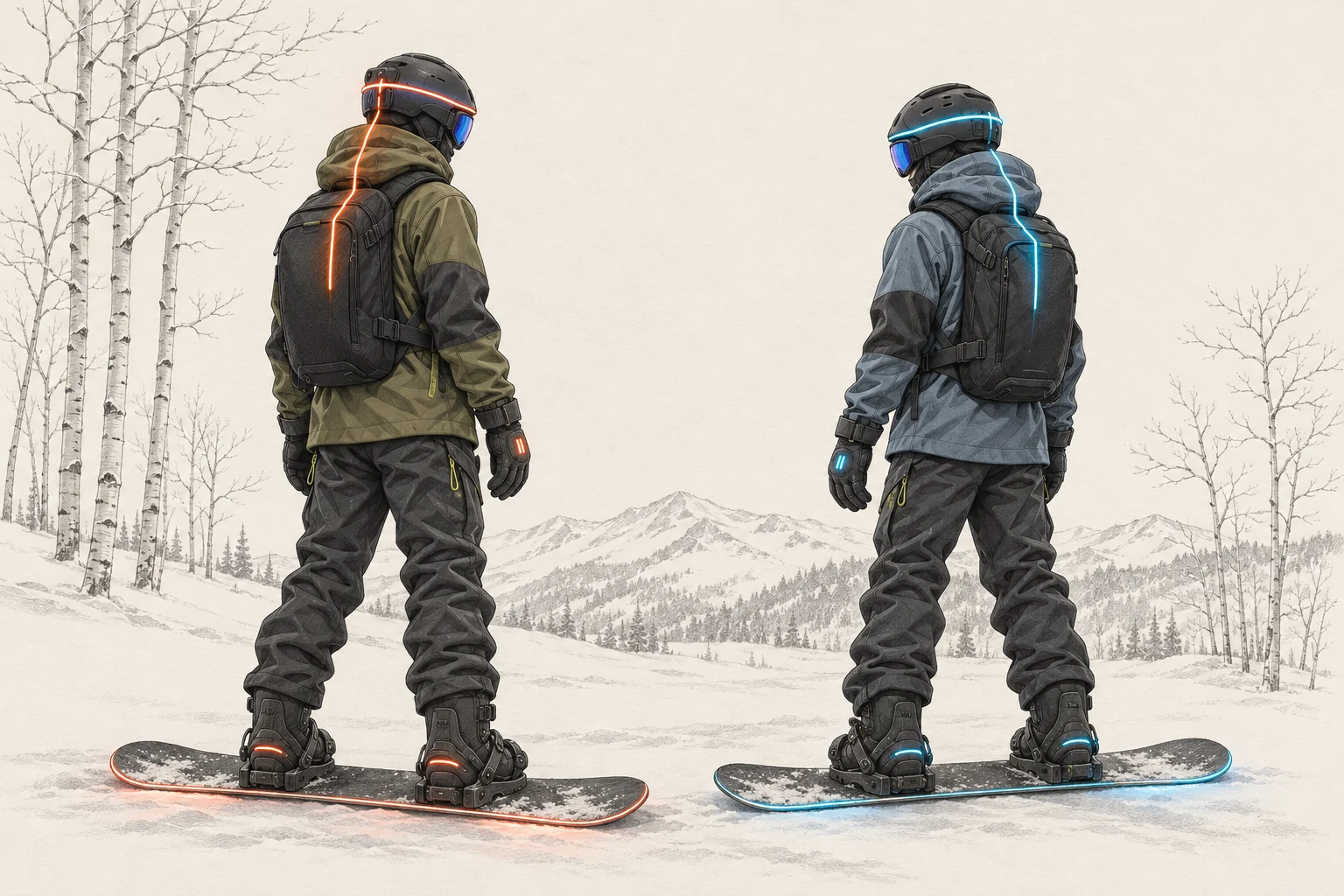
In the concept, P1 carries orange-red and P2 carries blue. The HUD pairs that color with a rider label. The lights make the film’s connected-rider idea visible; they do not establish tracking accuracy or guarantee visibility.
Join, select a mode, and review the course while stopped. Both riders confirm readiness. Early trials belong on a controlled course, with an easy way to leave the session.
Confirm who is in the session and whether the link is usable.
Agree the start, finish, and rules before any countdown.
Show timing and confirmed checkpoints, with a peer gap only when valid.
Save the result with both riders’ recordings, subject to their sharing choices.
A defined course, start and finish behavior, elapsed time, and relative gap. Prove a fair, reviewable result before adding a larger game world.
A cooperative session built around completing an agreed sequence together. Explore team progress rather than always rewarding speed.
Compare a new attempt with a previous recording after the run. A live ghost would be a separate research problem, not part of the first game.
Tracking loss pauses scoring or marks the result incomplete. Old positions never appear as current opponents. Missed checkpoints stay visible in the result. No points for proximity, near misses, or weaving through other riders.
The repository has simulation foundations for race timing, gates, relative markers, and delayed or missing updates. Real positioning, optics, links, and on-snow multiplayer remain to be demonstrated. These game modes are a product proposal.
Different parts. One purpose.